Winning a Public Art Supervision Contract
Public Art · Riyadh, Saudi Arabia
The opportunity
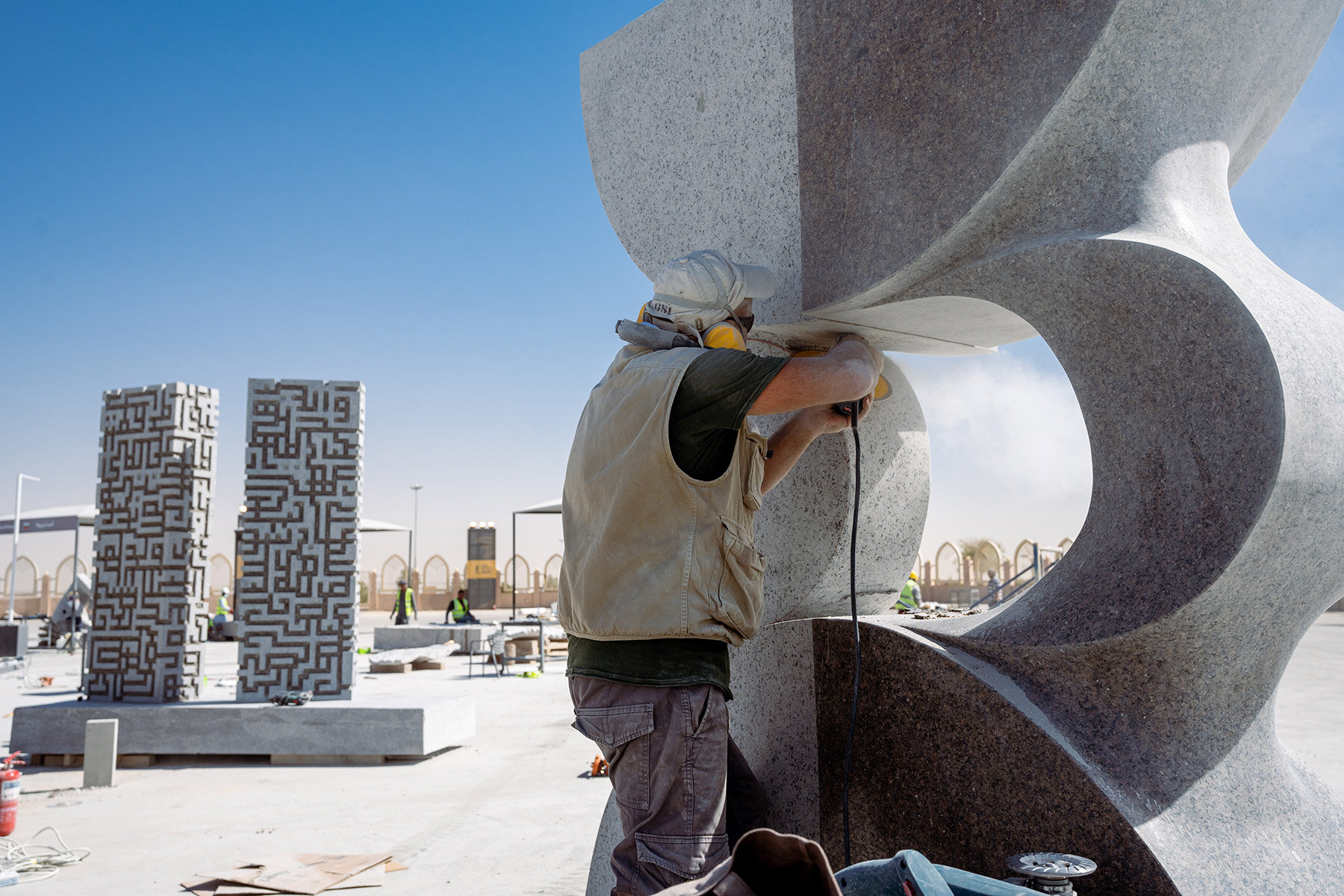
A government authority in Riyadh launched a programme to install monumental public artworks across the city — transforming the capital into an open-air gallery of contemporary sculpture. The programme formed part of a wider cultural initiative under Saudi Arabia’s national development strategy, with works by internationally recognised artists placed at civic landmarks, public squares and heritage locations.
The scope of works required project management consultancy and construction supervision for the fabrication, transport, installation and commissioning of large-scale sculptures in complex urban environments. Each artwork presented distinct engineering challenges — foundations in varying soil conditions, structural connections for pieces weighing several tonnes, crane access and traffic management in dense city-centre locations, and compliance with the authority’s quality and safety standards throughout.
The client issued a competitive tender for the PMC and supervision mandate, requiring demonstrated experience in both large-scale cultural project delivery and Saudi construction practice.
Our role
We were working with a European firm specialising in the development of cultural assets. The firm had no previous experience in the supervision of monumental public art installations — outdoor sculpture at urban scale, with the logistical and structural complexity that entails. This was new territory.
We identified the tender as a strong fit for the firm’s broader credentials, provided those credentials were complemented by local engineering capability and direct construction supervision experience. We brokered a partnership with a Saudi engineering consultancy, creating a consortium that paired the European firm’s cultural project expertise with the local partner’s engineering infrastructure, regulatory knowledge and on-the-ground delivery capacity.
We managed the proposal from inception through to submission — coordinating the technical and commercial elements across both firms, structuring the responsibility matrix, aligning the fee proposal with the client’s procurement framework and ensuring the submission presented a credible delivery model. The technical proposal positioned the firm’s cultural development experience as directly transferable to the art installation programme, while the Saudi partner’s engineering track record addressed the construction supervision requirements. The commercial offer reflected the efficiencies of a joint venture with an established local presence.
The outcome
The consortium was awarded the contract. The engagement demonstrated how targeted team assembly and a carefully constructed narrative can open doors for firms entering an adjacent discipline — not just a new geography. The firm gained its first contract in Saudi Arabia in a field it had not previously worked in, while the Saudi consultancy added a distinctive cultural infrastructure credential to its portfolio.
The project also illustrated the value of managing the full proposal process rather than simply making an introduction. By coordinating the technical narrative, commercial structure and partnership terms, the submission presented the client with a single coherent offer rather than two firms proposing in parallel.